December 24th, 2014

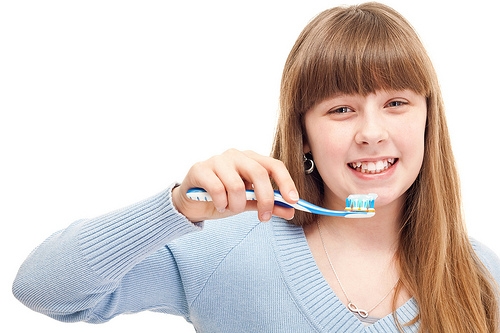
Children are born with a set of primary teeth – 20 to be exact – that help them learn to chew and speak, and develop enough space in the jaw for the permanent teeth that will appear several years later. Kids are especially susceptible to decay, which can cause pain and tooth loss – a problem that could interfere with oral development. As a parent, it is important that you take proactive steps to keep your child’s teeth as healthy as possible.
Bottles and “Sippie Cups”
One of the biggest culprits of childhood tooth decay is poor diet. This begins as early as a few months old, when children are often allowed to go to bed with bottles and “sippie cups” of milk or juice. The sugars in these beverages – even natural sugars – can steadily decay the teeth.
Dr. Timm and our staff suggest serving children milk and juice only at meal times, and limiting juice intake to just a few ounces per day. If your child becomes thirsty between meals or likes to go to bed with a bottle, serve water during these times.
Hygiene
As a parent, you can establish healthy dental habits long before your child’s first tooth erupts. Start by gently wiping your baby’s gums with a clean wash cloth during the first months of life. By age one, graduate to an appropriately sized toothbrush with fluoridated toothpaste, and brush at least twice a day.
Dental Visits
Dental visits should start young and continue on a regular basis throughout your child's life. Dr. Timm and our staff recommend parents bring their children to Blue Spruce Dental for the first time no later than the child’s first birthday. Initial visits concentrate on parental education, while later visits may include thorough cleanings and fluoride treatments as your child grows.
For more information about keeping your child’s teeth cavity-free, contact our Michigan Center, MI office to schedule a dental consultation and checkup.
December 17th, 2014

Do you have a space where a tooth used to be? Were you born with a missing tooth? Are you getting ready for dentures? You may be a good candidate for a dental implant. Metal dental implants were invented in 1965. Technology continues to advance with millions of implants placed in the United States and Canada. Placing implants has become mainstream and a common practice for offices like ours.
A dental implant is a small titanium post, which resembles a screw with threads. The post also has holes for bone to integrate. A dental implant is placed into the jawbone during a short dental procedure. It is relatively painless with very little post-operative pain. The threads on the implant post allow for the bone to fill in and integrate. To facilitate this process the implant is re-covered with gum tissue and allowed to heal and integrate for nearly three months. The implant acts as the root for the tooth to provide solid and stable support for the crown that’s yet to be placed.
The next step in the dental procedure is to uncover the implant and place a healing cap to allow the gum tissue to heal. After a short period of healing, an impression is taken to fabricate a crown to fully restore the missing tooth. The crown is then cemented on top of the post, at which point you can resume normal eating activities.
Dental implants do require some special care, but that is easily managed when you follow the directions outlined by Dr. Timm. During your regularly scheduled cleaning, special instruments are used to clean implants. While a dental implant cannot get a cavity, a condition known as peri-implantitis can occur. This is very similar to periodontal disease as the end result is dental implant loss and loss of bone structure. Be sure to floss the dental implant daily and run the floss under the implant crown as far as it can go to remove food and plaque. If you use any picks or small brushes to go in between your teeth, make sure they are plastic. Metal will scratch the implant making it more susceptible to infection. Be sure to keep your regular dental visits and cleanings to monitor the implant and help preserve your investment.
December 10th, 2014

Dr. Timm and our team at Blue Spruce Dental frequently get questions about cavity causes and prevention. You brush twice a day and floss regularly. You rinse with mouthwash, just like the dentist recommended. In fact, you can’t remember the last time you had a cavity, but you think it was when you were a little kid. In all seriousness, you thought only kids got cavities.
The Signs and Symptoms of a Cavity
It’s believed that roughly 90% of North Americans will get at least one cavity in their lifetime. Those other ten percent, it seems, can eat as much pie, cake, and sugary cereals and sweets as they want. That’s not really true; just a stab at dental humor, and it was as bad as the pain your cavity is probably giving you.
When a cavity is in its initial stages, you will often be symptom-free and experience no discomfort at all. It’s not until the tooth decay has reached a certain level that you will begin to notice the signs and symptoms. While a toothache and sensitivity to hot and cold foods and liquids are surefire signs that you have a cavity, there are lesser-known symptoms as well. If you’re experiencing any of these warning signs, you may want to consider making an appointment with our office as soon as possible:
- Persistent bad breath or a bad taste in the mouth
- When you bite down, there is a sticky, tarry feeling
- Puss or discharge around a tooth
- A visible discoloring, usually black or brown
- Small pits or holes in the tooth
Routine dental care is important. While good oral hygiene, a healthy diet, and regular cleanings will deter the formation of cavities, they do not constitute a foolproof practice. A cavity can occur at any time, no matter what your age. Bacteria causes tooth decay, and no amount of brushing, flossing, and rinsing will eradicate all the bacteria from your mouth. If you think you may have a cavity, please contact our office immediately.
December 3rd, 2014

You live in the golden age of toothbrushes. Until a few decades people used twigs or brushes made from animal hair to clean their teeth: not very soft and none too effective.
Now, you have a choice of manual brushes with soft, medium, or hard bristles. Or you might choose to go with an electric toothbrush instead.
Have you ever wondered whether manual or electric brushes provide better cleaning? Actually, they both do the job. The key is to brush and floss every day, regardless of the kind of brush you prefer.
At our Michigan Center, MI office, we like to say the best brush is the one you'll use. So if you prefer manual, go for it. If you prefer electric, turn it on.
Both types have their advantages but both types will get the job done as far as removing plaque.
Electric Toothbrushes
- Provide power rotation that helps loosen plaque
- Are great for people with limited dexterity due to arthritis or other problems
- Are popular with kids who think the electric brushes are more fun to use
- Can come with variable speeds to help reduce pressure on sensitive teeth and gums
Manual Toothbrushes
- Can help brushers feel they have more control over the brushing process
- Allow brushers to respond to twinges and reduce the pressure applied to sensitive teeth and gums
- Are more convenient for packing when traveling
- Manual brushes are cheaper and easier to replace than the electric versions.
In many ways, the golden age is just beginning. There are already phone apps available to remind you to brush and floss. New apps can play two minutes worth of music while you brush, help you compare the brightness of your smile or help explain dental procedures. Maybe someday we’ll even have programs that examine your teeth after brushing and identify spots you might have missed.