Our Blog

Gum Disease in Children

November 18th, 2020

When it comes to gum disease and your child, it’s a good news/bad news situation. The very good news is that children rarely suffer from advanced gum disease, or periodontitis. The not-so-good news? Early gum disease, called gingivitis, is unfortunately an all-too-common childhood problem.

  • What does gingivitis look like in children?

Childhood gingivitis has the same causes and symptoms as the adult version. Healthy gums are firm and pink. When bacteria and plaque accumulate on the teeth, your child’s gums become irritated and inflamed. Call our Michigan Center, MI office right away if you notice any of these symptoms of gingivitis: bleeding gums, puffiness, redness, gum tissue receding from the teeth, or bad breath even after brushing.       

  • How to Prevent Gingivitis

The most common cause of gingivitis is poor dental care. Creating a regular dental routine is the best way to prevent gingivitis from ever developing! Brushing and flossing with your child for two minutes twice a day from the very beginning helps make healthy cleaning a lifelong habit. Care should be taken to gently brush teeth at the gum line to make sure plaque doesn’t get a chance to build up there and cause gum irritation. And when your child comes in for regular cleanings, Dr. Timm can be sure that any plaque that might remain on the teeth is removed.

Two additional notes: as your child approaches adolescence, hormone fluctuations can make gums more sensitive and easily irritated. This is a time to really emphasize careful and gentle brushing and flossing. Also, some medical conditions may make children more pre-disposed to gum problems, so be sure to make us aware of your child’s medical history.

  • Uncommon Gum Diseases

While gingivitis is very preventable with proper dental hygiene, there are some rare gum conditions that can occur around the time of puberty that are quite different from gingivitis. Aggressive Periodontitis can cause severe bone loss around the first molars and incisors, even without any kind of plaque build-up, and Generalized Aggressive Periodontitis leads to inflammation of the gums, heavy plaque, and, eventually, loose teeth. Again, these conditions are rare, but if you have a family history of these diseases, let us know. Checkups and cleanings are a great way to catch any potential gum problems, so be sure to bring your child in for regular visits.

Almost all childhood gingivitis is preventable. With careful brushing and flossing at home, and visiting us regularly for checkups and cleanings, your child can enjoy healthy gums and teeth now and learn habits that will keep those gums and teeth healthy for a lifetime. And that is a good news/great news situation!

Improve your oral health with xylitol!

November 11th, 2020

Xylitol tastes sweet, but unlike sugar, it is not converted to acid that can cause your teeth to decay. It’s a naturally occurring sweetener found in plants, fruits, and vegetables; even the human body produces it in small amounts. Xylitol is widely used in sugar-free chewing gum, mints, candies, and even certain forms of medicine.

The World Health Organization has approved xylitol because only a small amount is needed for its health benefits. It’s even safe for diabetics, with a glycemic index of only seven. Xylitol has 40% fewer calories than other types of carbs: less than three calories per gram.

So how can this natural sweetener benefit your oral health? Take a look at the facts. Tooth decay starts when bacteria consumes the sugars left in your mouth. When you eat sugary foods, the bacteria on your teeth will multiply and make acid that can destroy your enamel.

Xylitol is derived from fibrous parts of plants, so it does not break down like a regular sugar. It actually helps maintain a neutral pH level in the mouth, which in turn prevents bacteria from sticking to the teeth. The bacteria are then unable to digest xylitol, which means your teeth won’t develop enamel damage and cavities.

Studies have shown the consumption of xylitol as a sugar substitute or a dietary addition had a dramatic reduction in new cavities and even reversed existing cavities. These effects are long lasting: low cavity rates remained years after the trials were done.

When there’s less bacteria and acid in your mouth due to xylitol, your teeth stay healthier. The more frequently it’s ingested, the more you will prevent enamel damage.

Aim to consume around five grams a day, or one gram every three hours if possible. You can do this by consuming gum, tablets, candy, or mints that have xylitol as one of the first ingredients after your meals. You can find these products in health food stores and specialty grocery stores.

Since xylitol replaces sugar on a one-to-one ratio, it’s used in several common items:

  • Toothpaste
  • Mouth rinse
  • Baby oral wipes, gel, and pacifiers
  • Nasal wash
  • Dry mouth spray
  • Granulated forms for cooking
  • Granulated packets to add to drinks
  • Commercially prepared foods

Make sure to pick up items that contain xylitol the next time you’re at the store! This is an easy way to maintain great oral health. If you have specific questions about xylitol, ask Dr. Timm during your next appointment at our Michigan Center, MI office.

Digital X-rays

November 4th, 2020

X-rays are a vital diagnostic tool for any dental professional. X-rays help your endodontist perform a root canal, your orthodontist check the position of a tooth’s root, your oral surgeon discover a fracture. X-rays reveal what we can’t see with the naked eye—and that’s why they are an especially important tool for Dr. Timm as well.

Why Are X-rays Necessary?

There’s a lot going on below the surface. An X-ray can reveal such conditions as cavities between teeth or underneath fillings, abscesses and other infections in the bone, impacted wisdom teeth, and cysts and tumors. They can also show the size, shape, and density of the bone beneath the teeth, which is essential information for dental implant procedures or dentures.

How Do X-rays Work?

Traditional X-rays, or radiographs, make use of film just like traditional cameras. When you have an intraoral X-ray, for example, the film is sealed in a moisture- and light-proof packet, and placed inside the mouth to capture images of specific teeth and the bone around them.

The X-ray machine is aligned precisely with the film and an exposure is taken. The image at this point is latent, and won’t show on the film, because, just like photo film, traditional radiographs need to be chemically processed before they produce a visible image.

Digital technology, on the other hand, uses an electronic sensor instead of film. For an intraoral digital X-ray, a small sensor is positioned in the mouth just like a film. When the X-ray is taken, a digital image capture device produces an image which is formed by a matrix of pixels instead of a photo-like film exposure. This format allows the image to be sent directly to a computer for immediate display without requiring processing.

Even though these methods seem very similar, digital X-rays offer some significant advantages over traditional films. Let’s look at how they compare, more or less.

  • More Diagnostic Advantages

A traditional X-ray is a fixed image. It cannot be modified or enhanced. Here the digital X-ray offers a clear advantage in diagnosis.

Just as you can enlarge certain types of images on your computer without blurring or losing detail, a digital X-ray uses computer software to magnify images while keeping their details sharp. They can also be enhanced through brightness and contrast applications to make details stand out even more. Both of these benefits are extremely helpful for diagnosis, especially when looking for small cavities, problems in the roots and surrounding bone, or developing wisdom teeth.

There is even digital subtraction radiography software available that can be used to compare recent images to older ones, removing (“subtracting”) all the similarities in the two images to display only the changes in the two—even small changes—that have taken place over time.

  • Less Exposure to Radiation

Dental X-rays expose patients to very low levels of radiation, and modern technology means traditional X-rays expose patients to less radiation than ever before. Even so, digital X-rays have significant advantages. Radiation exposure can be reduced by an additional 10%, 20%, or more with a digital radiograph.

  • More Convenient for Sharing and Transmitting

If you need to share your X-rays with another dental specialist or physician, digital technology allows you to simply have them e-mailed to another office or multiple offices. You no longer need to worry about preserving physical copies, either.

  • Less Waste

Unlike traditional X-rays, digital X-rays don’t need to be processed, so you save time in the office. And while the processing time is not significant (usually several minutes), if you need to repeat some X-rays for a clearer picture, or require different images for several teeth, this time can add up.

Digital X-rays are also more eco-friendly.  The fact that they don’t need to be developed means that the chemicals used to process traditional films are no longer necessary—which also means that there is no need to dispose of chemical waste products afterward.

Our goal is to provide you with the safest, most efficient, and most effective dental treatment possible, and digital X-rays help us do that. If you have any questions about digital X-ray technology, contact our Michigan Center, MI office. We’re happy to explain the science—and the benefits—of high-tech radiography.

Make Tooth Brushing Fun

October 28th, 2020

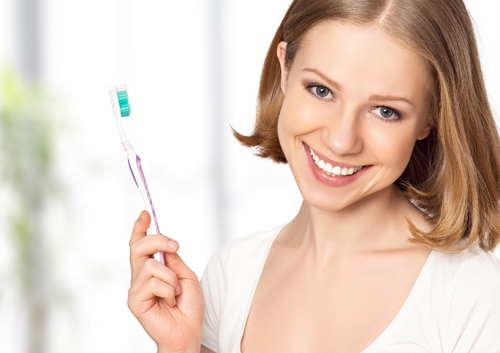
The best brushing routine for parent and child is two minutes of gentle brushing in the morning and two in the evening. But if the longest four minutes of your day are spent helping your child brush and floss, here are some suggestions for making that time fly.

Options!

Children’s brushes come in a wonderful variety of colors, patterns, and shapes. Allow your child to choose a favorite the next time you go shopping for dental supplies. Just make sure to choose a soft bristle brush with a head designed for small mouths. And since toothbrushes generally wear out after three months, your child will have plenty of opportunities to pick and choose! You might also explore the many flavors of children’s toothpaste to find the one that your child finds most appealing, and let your young brusher squeeze out a dab on that new brush.

Reward Daily Brushing

You don’t have to go to great lengths to make your son or daughter feel rewarded for a job well done. Allowing children to pick out a story for you to read or posting colorful stickers on a calendar sheet will encourage them to get into the habit of brushing.

Two-Minute Countdown

Time seems to go faster when we’re having fun. Your child might enjoy listening to songs or stories for the two minutes of brushing time. You can make your own playlist, invent a story starring your child, or make use of one of the dental apps that offer children’s music, videos, and stories in perfect two-minute segments.

Do It Together

Spend these two minutes twice a day with your child. You will be doing all the brushing at first, of course, but as your children get older, brush your teeth along with them. You can model proper brushing techniques for cleaning teeth, gums and tongue, and even let your child have a chance to brush your teeth for a change.

Don’t Forget Checkups!

Scheduling checkups and professional cleanings at our Michigan Center, MI office is vital to maintaining your child’s oral health. And, if your son or daughter is keeping up with good hygiene at home, these visits should be a breeze!

The habits your child develops now will be the foundation for a lifetime of oral health. Make these four minutes a day count. And if you can create ways to make them fun, those four minutes will fly by for both of you!

Contact Us!
call email